
Bowie Knife: Everything You Need to Know Before You Buy

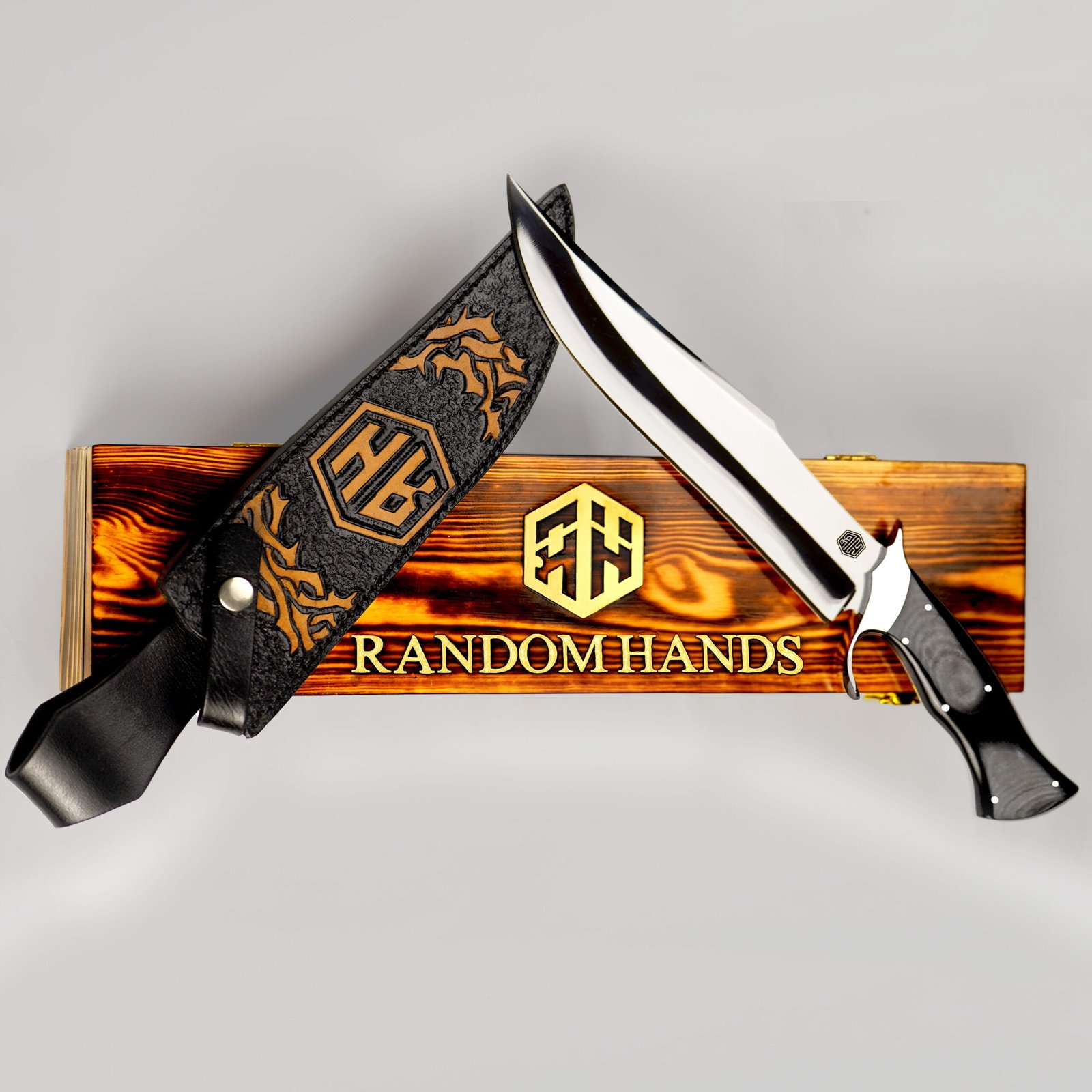
What Is a Bowie Knife?
The bowie knife is one of the most iconic fixed-blade knives in American history. Characterised by a large, clip-point blade, a cross-guard, and a sturdy single-edged design, the bowie knife was originally engineered for both combat and everyday frontier tasks — hunting, skinning, and survival.
At its core, a bowie knife typically features a blade length between 6 and 12 inches, a false edge (or sharpened clip) running from the spine toward the point, and enough heft to function as both a fighting knife and a camp tool. Modern bowie knives span everything from collectible heirloom pieces to heavy-duty tactical blades.
Quick-Reference: Bowie Knife Essentials
- Blade type: Clip-point or spear-point, single-edged
- Typical blade length: 6–12 inches (15–30 cm)
- Guard: Cross-guard or S-guard to protect the hand
- Steel types: High-carbon, stainless, or Damascus
- Handle materials: Wood, bone, micarta, rubber, synthetic
- Primary uses: Hunting, survival, tactical, collecting
Bowie Knife History: From the Sandbar Fight to Pop Culture Legend
Few knives are as steeped in history — and mythology — as the bowie knife. Its story begins in the early nineteenth century American South, winding through duels, wars, Hollywood blockbusters, and ultimately into the digital realm of modern video games.
The Original Bowie Knife and Jim Bowie
The original bowie knife is inextricably linked to James "Jim" Bowie (1796–1836), the frontiersman, land speculator, and hero of the Alamo. The exact origins of the knife bearing his name are disputed, but the story most historians accept centres on the infamous Sandbar Fight of September 19, 1827, near Natchez, Mississippi.
During this violent brawl, Bowie was shot, stabbed, and beaten — yet he reportedly killed one opponent and drove off others using a large knife of his own design. The story spread rapidly through newspapers, cementing the knife's reputation as a near-mythical fighting weapon.
"No knife in American history has generated more folklore, more imitation, and more controversy than the blade that bears Jim Bowie's name."
Who Made the First Bowie Knife?
There are two competing claims. The most popular credits Jim's elder brother, Rezin Pleasant Bowie, who supposedly designed the knife and had it crafted by blacksmith Jesse Clift in Louisiana around 1827. The second — and perhaps more romantic — tradition credits James Black, an Arkansas blacksmith of legendary skill, as the true maker of the iconic blade Jim carried at the Alamo.
Whatever its true origin, the bowie knife history took on a life of its own after the Sandbar Fight. Cutlers from Sheffield, England — then the world's knife-making capital — began producing and exporting their own versions to American buyers within years of the event.
Civil War, the Frontier Era, and Beyond
By the 1830s and 1840s, bowie knives were ubiquitous in the American South and on the frontier. Confederate soldiers carried them into the Civil War. Mountain men, hunters, and homesteaders relied on them for daily life. The blade became a symbol of American rugged individualism — and also of violence — prompting several US states to attempt to ban the knives outright.
By the late 19th century, as revolvers replaced knives as the primary fighting tool, the bowie knife transitioned from weapon to working tool and collector's object. Yet its cultural cachet never faded.
The Bowie Knife in Popular Culture
The knife's cultural life accelerated dramatically in the 20th century. Perhaps its most memorable Hollywood moment came in the 1986 film Crocodile Dundee, in which Paul Hogan's character — Mick "Crocodile" Dundee — pulls an enormous bowie-style blade and utters the immortal line: "That's not a knife. THAT'S a knife."
The Crocodile Dundee bowie knife — an oversized, hand-forged, clip-point blade with a carved bone handle — became one of cinema's most recognisable props and sparked a wave of interest in large-format bowie knives that echoes to this day.
Bowie Knife Blade Design & Key Features Explained
Understanding bowie knife history and blade design together is essential, because the blade evolved alongside the knife's cultural role. Here's a breakdown of the defining design elements.
The Clip-Point Blade
The most distinctive feature of a classic bowie is its clip point: the spine of the blade curves downward toward the tip, as though a portion has been "clipped" away. This creates a finer, more controllable point ideal for piercing while maintaining a wide belly for slicing. Some bowie knives feature a false edge — a sharpened section along the clip — turning the blade effectively double-edged at the tip.
The Cross-Guard
A hallmark of the design, the cross-guard (or S-guard) sits between blade and handle to protect the hand during combat. On traditional models it is made from brass or mild steel; on premium modern versions you'll find nickel silver or stainless steel guards with ornate detailing.
Blade Steel: High-Carbon vs. Stainless vs. Damascus
Blade steel is arguably the most important variable in a bowie knife's performance:
| Steel Type | Edge Retention | Corrosion Resistance | Ease of Sharpening | Best For |
|---|---|---|---|---|
| High-Carbon (1075, 1095) | Excellent | Low — needs oiling | Very easy | Hard use, bushcraft |
| Stainless (440C, AUS-8) | Good | Excellent | Moderate | Outdoor, wet conditions |
| Tool Steel (D2, CPM-3V) | Outstanding | Moderate | Harder | Tactical, heavy-duty |
| Damascus Steel | Very Good | Low–Moderate | Easy–Moderate | Collecting, display, gifts |
Handle Design
Traditional handles were crafted from elk horn, stag antler, or hardwood. Contemporary bowie knives use micarta (extremely durable and moisture-resistant), G10 fiberglass, rubber (for tactical models), or exotic wood and bone for collector pieces. Full tang construction — where the blade steel extends the full length of the handle — is the gold standard for strength.
Sheath & Carry
A quality bowie knife deserves a quality sheath. Leather sheaths with a belt loop are traditional, while modern versions often include Kydex polymer sheaths with MOLLE attachment systems for tactical carry.
Types of Bowie Knives
The bowie knife category is broad. Here are the major variants you'll encounter when shopping or collecting.
Classic
Traditional Bowie Knife
Fixed blade with clip point, cross-guard, 6–12" blade. The closest to the original design. Ideal for display, history enthusiasts, and hunters.
Modern
Tactical Bowie Knife
Streamlined for military or survival use. Features serrated spine, drop-point or clip-point blade, synthetic handle, and Kydex sheath. Heavy-duty steel.
Artisan
Damascus Bowie Knife
Forged from layered Damascus steel for distinctive wave patterns. Combines beauty with excellent cutting performance. Popular as gifts and collector pieces.
Versatile
Folding Bowie Knife
A bowie-profile blade in a folding format. Easier to carry legally in many jurisdictions. Perfect for those who want the aesthetics without the bulk.
Heritage
Old Timer Bowie Knife
Part of Schrade's beloved Old Timer range. Affordable, American-heritage styling with a traditional clip-point blade. A favourite among beginners and nostalgia collectors.
Collector
Case Bowie Knife
W.R. Case & Sons produces highly regarded bowie knives with traditional aesthetics, premium steel, and distinctive stag or bone handles. Heirloom quality.
Best Bowie Knife Brands & Models
Whether you're looking for a working knife, a collector's piece, or a rugged tactical blade, these are the brands that define the modern bowie knife market.
Cold Steel Bowie Knife
Cold Steel is the name most serious knife enthusiasts associate with hard-use bowie knives. Their offerings — including the legendary Natchez Bowie and the Laredo Bowie — feature thick, full-tang blades in 1075 carbon steel or San Mai tri-layered steel, designed to withstand extreme punishment. If you want a cold steel bowie knife that performs as hard as it looks, models like the Trail Master Bowie stand in a class of their own.
Case Bowie Knife
W.R. Case & Sons has been crafting American knives since 1889. Their case bowie knife lineup emphasises heritage styling, premium Tru-Sharp surgical steel blades, and handles in genuine stag, bone, and exotic woods. These are knives you buy to keep — and eventually pass down.
Old Timer Bowie Knife
The Old Timer bowie knife by Schrade is a time-honoured choice for entry-level and budget buyers who don't want to sacrifice character. The Schrade Old Timer Bowie features a clip-point blade in 7Cr17MoV stainless steel, a sawcut handle, and classic styling at an accessible price point.
Damascus Bowie Knife Makers
The Damascus bowie knife market is flourishing, with custom makers and production shops alike producing stunning pieces. Look for knives with a clearly stated layer count (256–512 layers is ideal for visual pattern density), an acid-etched finish to reveal the Damascus grain, and matched handle materials like camel bone, rosewood, or stabilised burl.
Reputable production-level Damascus bowies come from makers such as BPS Knives, Civivi, and Szco Supplies, while custom makers at knife shows produce truly one-of-a-kind pieces.
Tactical Bowie Knife: Top Performers
For a no-nonsense tactical bowie knife, look to manufacturers like KA-BAR, Gerber, ESEE Knives, and Tops Knives. These brands produce bowie-influenced fixed blades with modern steel, aggressive styling, and sheaths optimised for military and tactical carry.
Folding Bowie Knife Picks
The folding bowie knife occupies an interesting niche — it delivers bowie-profile aesthetics and respectable blade length in a more portable, legally friendlier package. Quality options include folders from Rough Ryder, Boker, and Buck Knives, all of which offer clip-point blades exceeding 4 inches in a folder format.
| Brand / Model | Type | Blade Steel | Blade Length | Best For |
|---|---|---|---|---|
| Cold Steel Trail Master | Fixed Blade | 1075 High Carbon | 9.5" | Hard use, bushcraft |
| Cold Steel Laredo Bowie | Fixed Blade | San Mai VG-10 | 11" | Collector, serious use |
| Case 316-6" Fixed Hunter | Fixed Blade | Tru-Sharp Surgical | 6" | Hunting, collecting |
| Old Timer 152OT Bowie | Fixed Blade | 7Cr17MoV Stainless | 7.6" | Budget, entry-level |
| KA-BAR Becker BK9 | Tactical Fixed | 1095 Cro-Van | 9.0" | Military, tactical |
| BPS Knives Damascus Bowie | Fixed Blade | Damascus 256-layer | 8.5" | Display, gifts |
| Rough Ryder Folding Bowie | Folder | 440 Stainless | 4.5" | EDC, legal carry |
Bowie Knife in CS:GO & CS2
The bowie knife has crossed from the physical world into the digital realm through the enormously popular tactical shooter franchise Counter-Strike. The bowie knife CS:GO skin was introduced as a cosmetic item — a wearable in-game knife skin that mirrors the classic clip-point blade profile of the real-world bowie knife.
With the transition to Counter-Strike 2 (CS2), the bowie knife CS2 skin was carried over and visually upgraded thanks to the Source 2 engine's improved rendering. The knife features realistic blade geometry, authentic cross-guard styling, and a wide variety of finish patterns — from the ultra-rare Fade and Case Hardened to the sleek Tiger Tooth and Doppler.
CS2 Bowie Knife: Key Facts for Traders
- Introduced in: CS:GO (Operation Breakout, 2014); carried into CS2
- Knife type: Fixed blade — cosmetic/knife class item
- Rare finishes: Fade, Doppler, Tiger Tooth, Case Hardened, Marble Fade
- Price range: ~$80 (Factory New plain finishes) to $2,000+ (Fade, Doppler)
- Where to buy: Steam Community Market, Skinport, BitSkins, CS.Money
- Float value matters: Factory New and Minimal Wear command significant premiums
The in-game bowie knife has become one of the most popular knife skins in the Counter-Strike community, valued for its authentic proportions and the wide variety of finish options available. If you're looking to add a bowie knife CS2 to your inventory, always verify the float value and pattern index before purchasing on third-party markets.
Bowie Knife for Sale: A Practical Buying Guide
With so many options on the market, finding the right bowie knife for sale can be daunting. Here's what to evaluate before you buy.
1. Define Your Primary Use
- Hunting & field work: Prioritise carbon steel, full tang, 6–8" blade, and a leather sheath.
- Tactical & survival: Choose a thicker blade (5mm+), synthetic handle, Kydex sheath, and a reputable tactical brand.
- Collecting & display: Focus on craftsmanship, steel quality, handle material, and provenance. Damascus and Case models excel here.
- Everyday carry: A folding bowie knife offers the aesthetics without the fixed-blade legal complexities in many areas.
2. Know Your Budget
The bowie knife market spans a wide price range. Entry-level quality begins around £30–£60 / $40–$80 (Old Timer, Cold Steel budget range). Mid-range quality — where you get excellent steel and construction — sits between £80–£200 / $100–$250. Premium hand-forged, custom, or Damascus models run from £200 to £2,000+.
3. Check Legality in Your Area
Laws regarding fixed-blade knives vary significantly. In the United Kingdom, carrying a fixed blade in public is generally illegal without a lawful reason, though ownership is legal. In the United States, legality varies by state and municipality. Always research local knife laws before carrying a bowie knife in public.
4. Where to Buy a Bowie Knife
- Online retailers: BladeHQ, KnifeCenter, Amazon, and eBay all stock a wide range.
- Specialist knife shops: Best for handling before purchase — invaluable for getting the right feel.
- Knife shows: Excellent for custom Damascus and hand-forged bowie knives from artisan makers.
- Direct from makers: Cold Steel, Case, and ESEE all sell direct via their own websites.
5. Quality Checks Before Buying
- Check the blade tang: full tang is always stronger than partial or rat-tail tang.
- Look for even, consistent edge geometry with no rolled or chipped sections.
- Ensure the guard fits snugly with no side-to-side play.
- Test the handle fit in your hand — comfort matters for extended use.
- For Damascus knives, confirm the pattern is authentic acid-etch on real Damascus, not printed decoration.
Frequently Asked Questions
Here are the most common questions people ask about the bowie knife.
Originally designed as a fighting and utility knife, the bowie knife today is used primarily for hunting (skinning and butchering game), camping and survival tasks (batoning wood, food prep), collecting, and display. Tactical versions serve military and law enforcement. In many households, bowie knives are cherished heirlooms rather than working tools.
A bowie knife is distinguished by its large clip-point blade (typically 6–12"), cross-guard, wide blade belly, and the characteristic false edge along the clip. This combination makes it far more versatile than most knives — capable of thrusting, slicing, and chopping with equal effectiveness. Its size and cross-guard set it apart from hunting knives, and its fixed-blade nature distinguishes it from folding knives.
Owning a bowie knife in the UK is generally legal for adults. However, carrying a fixed-blade knife in a public place without a lawful reason (such as for work) is illegal under the Criminal Justice Act 1988. Knives with a blade exceeding 3 inches (7.62 cm) that are fixed are prohibited from public carry. Always check current UK knife law if you are unsure — and never carry any knife in public without clear lawful justification.
The bowie knife CS:GO skin was introduced in 2014 as part of Operation Breakout and rendered using the Source engine. The bowie knife CS2 version is the same skin concept, but re-rendered in Source 2 with improved lighting, surface detail, and material shaders. Both versions share the same cosmetic finishes and float value system, but CS2 models generally appear more visually detailed on high-end hardware. CS:GO inventories were migrated automatically to CS2.
A Damascus bowie knife features a blade forged from layered Damascus steel — a process where two or more types of steel are repeatedly folded and forged together to create distinctive flowing, wavy, or ladder-like patterns. The resulting blade combines the hardness of one steel with the toughness of another. Modern Damascus is often made from 1075 and 15N20 steel combinations. These knives are prized for both visual beauty and cutting performance, making them popular as collector pieces and gifts.
The famous "Crocodile Dundee bowie knife" from the 1986 film was a custom-made prop knife created by Australian bladesmith Reg Watt. It featured a large clip-point blade approximately 12–14 inches long with a blood groove, a brass cross-guard, and a carved bone handle. Multiple replicas were made for filming. The knife became one of cinema's most iconic props and is widely replicated today. Collectors and fans can find Crocodile Dundee-style bowie knife replicas sold by specialty knife makers worldwide.
The Sunshine Bowie Knife by Random Hands
If you're looking for a standout bowie knife that blends artisan craftsmanship with genuine field performance, the Sunshine Bowie Knife from Random Hands is our top recommendation. Hand-forged with meticulous attention to the classic bowie profile — clip-point blade, defined cross-guard, and a beautifully finished handle — it's the kind of knife that earns its place both on the wall and in the field. The distinctive design and premium build quality make it an exceptional choice for collectors, hunters, and bowie knife enthusiasts alike.
Related Topics
Bowie Knife History Original Bowie Knife Best Bowie Knife Bowie Knife for Sale Cold Steel Bowie Knife Case Bowie Knife Damascus Bowie Knife Tactical Bowie Knife Folding Bowie Knife Old Timer Bowie Knife Bowie Knife CS2 Crocodile Dundee Bowie Knife Blade DesignReady to Find Your Perfect Bowie Knife?
Browse our curated selection of the best bowie knives — from Cold Steel to Damascus handmade pieces.
Shop Bowie Knives