Best Hunting Knife Guide 2026: How to Choose, Sharpen & Care for Yours
Updated for 2026. Whether you're field-dressing your first whitetail or replacing a blade that's finally given up, this guide covers everything you need to know about hunting knives — the best fixed blade and folding options on the market, how brands like Benchmade, Buck, Gerber, and Old Hickory compare, and the sharpening angles, cleaning steps, and legal facts every hunter should know.
- What Is a Hunting Knife?
- What Is a Hunting Knife Used For?
- Types of Hunting Knives
- Best Hunting Knives of 2026 (By Category)
- What to Look For in a Good Hunting Knife
- How to Sharpen a Hunting Knife (Angle Guide)
- How to Clean a Hunting Knife
- How to Make a Hunting Knife
- Is It Legal to Carry a Hunting Knife?
- Frequently Asked Questions
What Is a Hunting Knife?
Unlike a general-purpose pocket knife or a kitchen knife, a hunting knife is engineered around one job: processing an animal in the field, cleanly and safely. Blade shape, steel type, and handle material are all chosen to make gutting, skinning, and quartering easier — not for cutting rope or opening boxes, even though it can do that too.
What Is a Hunting Knife Used For?
A hunting knife is used for field dressing (removing internal organs), skinning the hide, separating joints, and breaking an animal down into manageable cuts. Many hunters carry two knives: a shorter, more control-oriented blade for delicate work like caping a trophy head, and a larger fixed blade for the heavier cutting involved in quartering.
Specific tasks a hunting knife handles well:
- Making the initial incision for field dressing
- Skinning the hide away from the meat
- Separating tendons and joints during butchering
- Trimming silver skin and excess fat
- Opening the gut hook variant: slitting hide without puncturing the stomach cavity
What Does a Hunting Knife Look Like?
Most hunting knives share a recognizable profile: a drop-point or clip-point blade between 3–6 inches, a single sharp cutting edge, a slight belly curve for skinning strokes, a full or partial tang, and a textured or contoured handle in materials like G10, micarta, wood, or rubberized polymer. Some include a gut hook — a small curved notch on the spine — for opening hide without nicking the entrails.
Types of Hunting Knives
Fixed Blade Hunting Knife
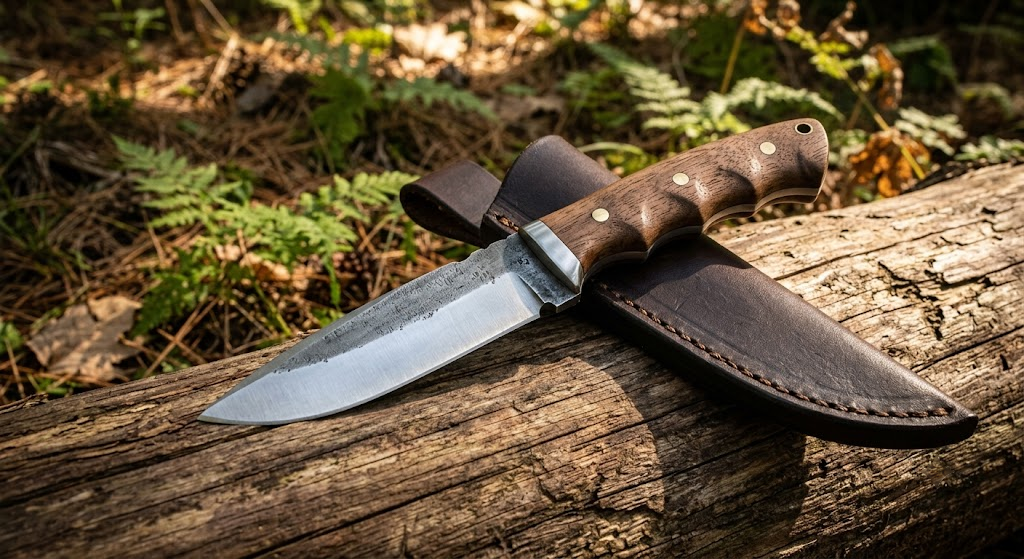
A fixed blade hunting knife has no folding mechanism — the blade is permanently set in the handle, usually with a full tang running through it. This makes it stronger, easier to clean, and more reliable under heavy use than a folder, which is why most experienced hunters treat the fixed blade as the standard "workhorse" choice for field dressing and butchering. Fixed blades are carried in a sheath, typically leather or Kydex.
Folding Hunting Knife
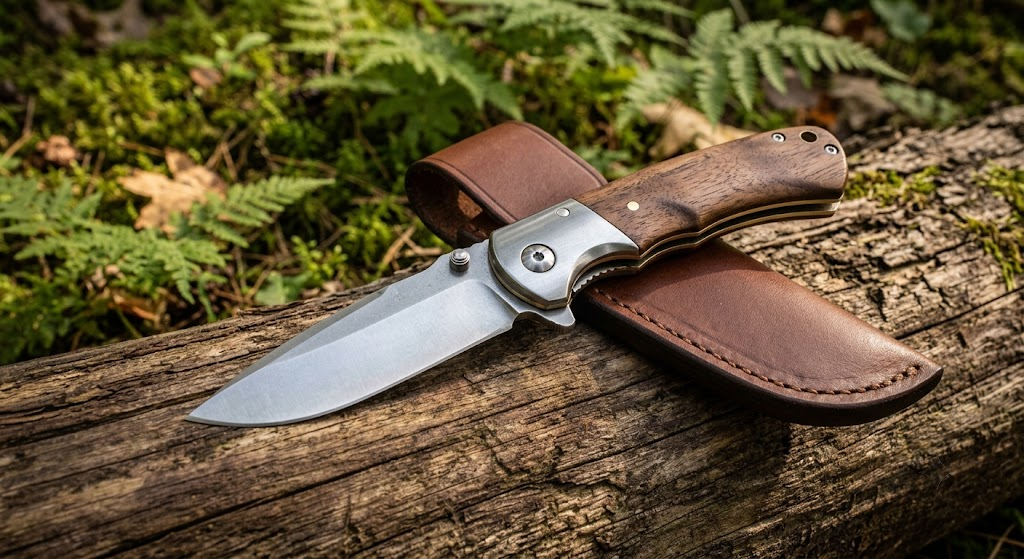
A folding hunting knife pivots closed into its own handle, making it more compact and pocket-friendly. Modern folding hunters use strong lock mechanisms (frame lock, back lock, or lockback designs) to stay rigid during use. They're a great secondary or backup knife, or a good pick for hunters who prioritize compact carry over maximum durability.
Hunting Knife with Gut Hook
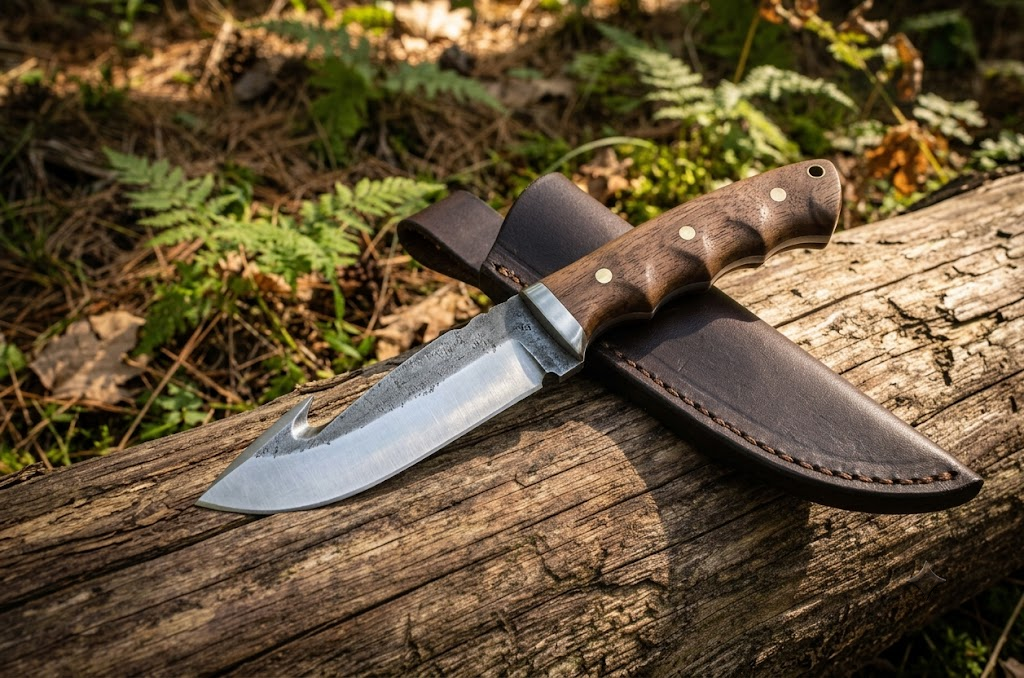
A gut hook is a small, sharpened hook built into the spine of the blade. It's designed to be inserted just under the hide and pulled forward, opening the skin in a straight line while the rounded inside edge keeps you from puncturing the stomach or intestines. It's a popular add-on for deer and elk hunters who want a faster, cleaner field-dressing process.
Hunting Knife Sets
A hunting knife set typically bundles a fixed blade skinner, a smaller caping or detail knife, a bone saw, and a sharpening tool in one case. Sets are popular with hunters who want a complete, grab-and-go butchering kit rather than sourcing each tool separately, and they make a strong gift option for new hunters.
Best Hunting Knives of 2026 (By Category)
"Best" depends heavily on what you're hunting, your budget, and whether you value edge retention, ease of sharpening, or price. Here's how the most searched-for brands and styles stack up in 2026.
| Category | Top Pick Style | Why It Stands Out |
|---|---|---|
| Best overall / best fixed blade hunting knife | Drop-point fixed blade, full tang, premium steel | Best balance of durability, edge retention, and control for field dressing and skinning |
| Benchmade hunting knife | Fixed or folding, CPM-S30V/S45VN steel | Known for premium steel, tight tolerances, and long-lasting edge retention |
| Buck hunting knife / Buck 120 hunting knife | Clip-point fixed blade, the classic "Woodsman" | The Buck 120 is a decades-old American icon prized for its long blade, brass guard, and leather sheath |
| Gerber hunting knife | Fixed blade with rubberized grip | Budget-friendly, widely available, solid entry-level choice |
| Damascus hunting knife | Layered/pattern-welded steel blade | Prized for its distinctive wavy grain pattern and often hand-forged craftsmanship |
| Old Hickory hunting knife | Carbon steel, wood handle | Old-school carbon steel that takes an extremely sharp edge and is easy to re-sharpen, at a low price point |
| Custom hunting knife | Maker-forged, one-off design | Built to exact hand size, blade preference, and steel choice — ideal for a lifetime or heirloom knife |
| Large hunting knife | 6+ inch blade, Bowie or clip-point style | Better for heavy quartering and big game like elk or hogs |
| Best deer hunting knife | 3.5–4.5 inch drop-point, optional gut hook | Mid-size blade gives the control needed for caping and skinning whitetail |
Best Deer Hunting Knife
For deer, most hunters do better with a shorter, more maneuverable blade — around 3.5 to 4.5 inches — rather than a long Bowie-style knife. A drop-point profile with a gently curved belly makes skinning easier, and a gut hook variant speeds up the initial field-dressing cut.
What to Look For in a Good Hunting Knife
What makes a good hunting knife comes down to five factors:
- Steel quality: Look for steel that holds an edge (like S30V, 154CM, or D2) or, for easy field sharpening, a simpler high-carbon steel.
- Blade shape: Drop-point blades are the most versatile all-purpose choice; clip-points offer a finer tip for detail work.
- Full vs. partial tang: A full tang (steel running the entire length of the handle) is stronger and more durable for hard use.
- Handle grip: Textured G10, micarta, or rubberized handles stay secure even when your hands are wet or bloody.
- Sheath quality: A hunting knife with a sheath made from Kydex or quality leather protects the blade and keeps it accessible on your belt or pack.
How Long Is a Hunting Knife?
Most hunting knife blades run between 3 and 6 inches. Smaller 3–4 inch blades offer precision for caping and detail work; 4–5 inch blades are the most popular all-around size for deer and similar game; blades of 6 inches or more are considered "large hunting knives" and are better suited to big game like elk, hogs, or bear where more leverage is needed for quartering.
How to Sharpen a Hunting Knife (And the Right Angle)
Step-by-Step: How to Sharpen a Hunting Knife
- Choose your sharpening angle (see above) and stay consistent throughout.
- Start with a coarse grit stone or sharpener to reset the edge if it's dull or nicked.
- Draw the blade across the stone in a slicing motion, maintaining the same angle on each pass.
- Alternate sides evenly to keep the edge centered.
- Switch to a fine grit stone to polish and refine the edge.
- Strop the blade on leather to remove any burr and finish the edge.
- Test sharpness on paper or a fingernail — it should shave cleanly without snagging.
How to Sharpen a Gut Hook on a Hunting Knife
A gut hook can't be sharpened on a flat stone since its edge is curved and on the inside of the hook. Instead, use a small round or tapered ceramic/diamond rod (often called a gut hook sharpener or "hook and gut" tool) and draw it through the hook's curve in a smooth, repeated motion, matching the existing bevel angle rather than trying to reinvent it.
Best Hunting Knife Sharpeners
The best hunting knife sharpener depends on where and how you sharpen:
- Pull-through sharpeners: Fast and beginner-friendly, good for quick touch-ups in the field.
- Whetstones (water or oil stones): Slower but give the most control and the sharpest possible edge — the choice of most serious knife owners.
- Guided sharpening systems: Clamp the blade and hold a fixed angle for consistent results, great for beginners who want stone-level sharpness without the learning curve.
- Diamond rods / ceramic rods: Compact, pack well for hunting trips, and double as a gut hook sharpener.
How to Clean a Hunting Knife
Clean your hunting knife as soon as possible after use — blood and tissue left on the blade or in the handle joints can cause pitting and corrosion, especially on carbon steel blades.
- Rinse the blade under warm water to remove blood and debris immediately after use.
- Wash with mild dish soap and a soft cloth or sponge — avoid abrasive scrubbers on polished blades.
- Dry the blade completely and immediately; never let it air dry, especially carbon steel.
- Apply a light coat of mineral oil or dedicated knife oil to the blade to prevent rust.
- Clean and dry the handle and any joints/pivots (on folders) where blood can collect.
- Store the knife dry, ideally out of its sheath if the sheath is leather, since leather can trap moisture.
How to Make a Hunting Knife
Making a hunting knife from scratch is a serious craft project, but the basic process looks like this:
- Choose your steel: High-carbon steel (like 1095) is popular with beginners for its ease of grinding and heat treating.
- Cut and grind the blade profile from flat stock using a bandsaw or angle grinder, then refine the bevels on a belt grinder.
- Heat treat the blade: Heat to critical temperature, quench, then temper to balance hardness and toughness.
- Attach the handle (tang): Fit and pin or epoxy scales (wood, G10, micarta) onto a full tang, or peen a hidden tang into a handle block.
- Sharpen and finish: Grind the final edge bevel, sand and polish the blade and handle, and finish with oil or a protective coating.
- Make or buy a sheath to protect the finished blade.
Custom hunting knife makers spend years refining heat-treating and grinding technique — if you're new to bladesmithing, starting with a knife-making kit is a safer first project than forging from raw bar stock.
Is It Legal to Carry a Hunting Knife?
In most of the United States, it is legal to carry a fixed-blade hunting knife openly, especially while actively hunting, hiking, or camping, but laws vary significantly by state and city, and some jurisdictions restrict blade length or concealed carry of fixed blades. Always check your specific state and local knife laws before carrying — rules can differ for concealed vs. open carry, blade length limits, and carrying in vehicles or on school/government property.
Frequently Asked Questions
What is the best hunting knife?
There's no single "best" — it depends on your game and budget. For most hunters, a full-tang, drop-point fixed blade in a mid-size (4–5 inch) length from a proven brand like Benchmade, Buck, or Gerber covers the widest range of tasks.
What is a good hunting knife?
A good hunting knife holds an edge through a full field dressing session, has a comfortable non-slip grip, and comes with a secure sheath — full tang construction and quality steel are the biggest indicators of a well-made knife.
What's a good hunting knife for a beginner?
Beginners generally do well with a mid-priced fixed blade like the Buck 120 or a Gerber fixed blade — both are durable, easy to sharpen, and forgiving to learn on before investing in premium steel.
What makes a good hunting knife?
Steel quality, full tang construction, a comfortable and secure handle, an appropriate blade shape for your game, and a well-fitted sheath together make a good hunting knife.
How do I draw a hunting knife (for sketching/design)?
To draw a hunting knife, start with the overall silhouette: a slightly curved blade with a straight spine, a pronounced belly near the tip, a guard separating blade from handle, and a contoured handle. Sketch the drop-point tip first, then build the cutting edge curve, add the guard, and finish with handle texture lines and, if desired, a gut hook notch on the spine.
How long is a hunting knife?
Typically 3 to 6 inches, with 4–5 inches being the most common all-purpose length.
What angle should a hunting knife be sharpened at?
Generally 20–25 degrees per side, though precision skinning blades can be sharpened as fine as 15–17 degrees per side.
Looking for a hunting knife you can actually rely on in the field?
Explore fixed blade, folding, and Damascus hunting knives — plus sharpeners and gear — from Random Hands. Handpicked for hunters who need a knife that performs when it counts.